

I'm back again, but this time to talk about deepfakes and the risks associated with them.
Let's explore this in more detail.
We've seen that some AI systems today can generate very high-quality content such as text, audio files, images, or videos.
Some of these AI-generated contents are referred to as "deep fakes" and can pose a variety of risks to society. Let's learn more about them.
A deepfake is an image, audio, or video content generated or manipulated by artificial intelligence that resembles existing people, objects, places, institutions, or events and could falsely appear authentic or real to a viewer.
Artificial Intelligence Act. (n.d.). Article 3: Definitions. Retrieved January 14, 2026, from https://artificialintelligenceact.eu/de/article/3/
Generative AI technologies are evolving rapidly, and deepfakes are becoming increasingly convincing and harder to distinguish from genuine content.
Deepfakes can be a powerful tool. For example, they could be used to create individual avatars of doctors or educators that are more engaging for viewers, or to anonymize participants in video-based group therapy sessions.

Seth, A. (2025, March 17). How AI-Powered Avatars Are Revolutionizing Patient Health Education. 5thPort. https://www.5thport.com/how-ai-powered-avatars-are-revolutionizing-patient-health-education/
Nevertheless, deepfakes can pose a variety of risks to citizens. Let's examine some of these on the following pages.
Deepfakes can be used to target individuals for harassment. An extreme form of such harassment is the creation of non-consensual pornography.
A recent example is that Grok AI (a chatbot developed by Elon Musk's startup xAI) was used on X at the end of December 2025 to generate non-consensual images of other users.

AI Forensics. (2026, January 5). Grok generating flood of sexualized images of women and minors. AIForensics.org. https://aiforensics.org/work/grok-unleashed
This incident is not isolated but part of a broader pattern in which generative AI is increasingly used to "undress" people without their consent and create pornographic images. Deepfake applications like DeepFaceLive or DeepFaceLab can be used to insert a non-consenting person's face into pornographic videos. These deepfake technologies have been used to facilitate massive online abuse and harassment and to run illegal online pornography operations.
Below you will find some examples of well-known deepfake cases (if you'd like to learn more, click the article image):
Deepfakes pose significant risks to individuals and technological systems. For example, an attacker could use artificial intelligence to imitate a family member's voice and then attempt to trick a relative out of their money.
This attack can also target individuals within an organization through more advanced social engineering techniques.
For example, in February 2024 there were reports of an incident in which a finance employee at a multinational company in Hong Kong was persuaded to transfer $25 million. The fraud was carried out via a Zoom meeting attended only by deepfake representations, including the company's chief financial officer.

Chen, H., & Magramo, K. (2024, February 4). Finance worker pays out $25 million after video call with deepfake ‘chief financial officer’. CNN. https://edition.cnn.com/2024/02/04/asia/deepfake-cfo-scam-hong-kong-intl-hnk/index.html
Deepfakes can also lead to the defamation of individuals.
One example involved a generated voice that sounded like actress Emma Watson reading an excerpt from "Mein Kampf."
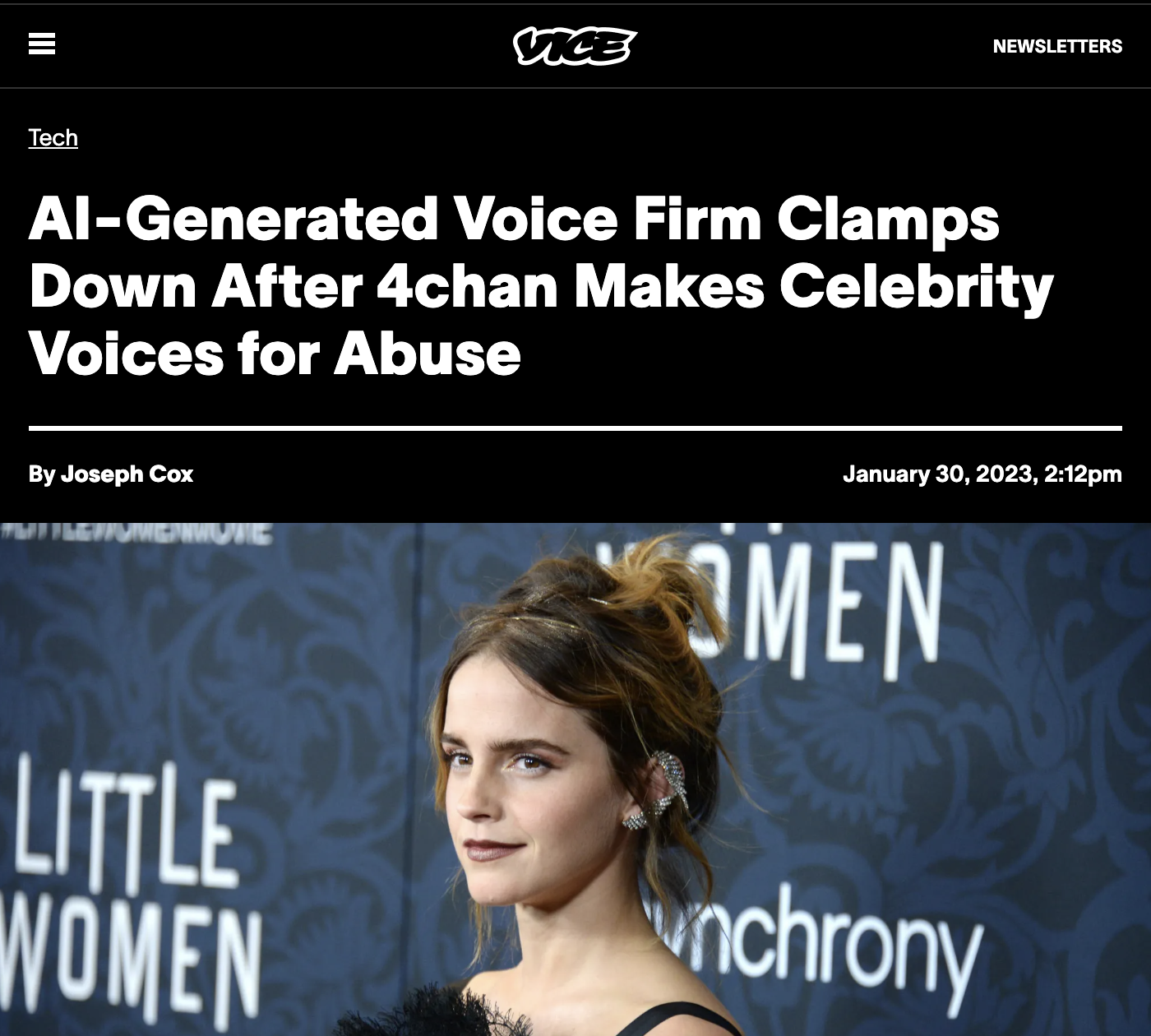
Cox, J. (2023, January 30). AI-Generated voice firm clamps down after 4chan makes celebrity voices for abuse. Vice. https://www.vice.com/en/article/ai-voice-firm-4chan-celebrity-voices-emma-watson-joe-rogan-elevenlabs/
Deepfakes are often seen as a particularly dangerous form of misinformation and manipulation. For example, deepfakes in politics could have negative effects on election outcomes. Previous studies show that election-related deepfakes aim to amplify manipulation and polarization, reduce mutual respect, and undermine citizens' and other political actors' trust in the fairness and integrity of elections.
Alongside deepfakes there are also softfakes — artificial and unrealistic images, videos, or audio files created and edited by AI algorithms to make a political candidate appear more attractive. While deepfakes are often linked to malicious actors, softfakes are frequently produced by a candidate's own campaign teams.
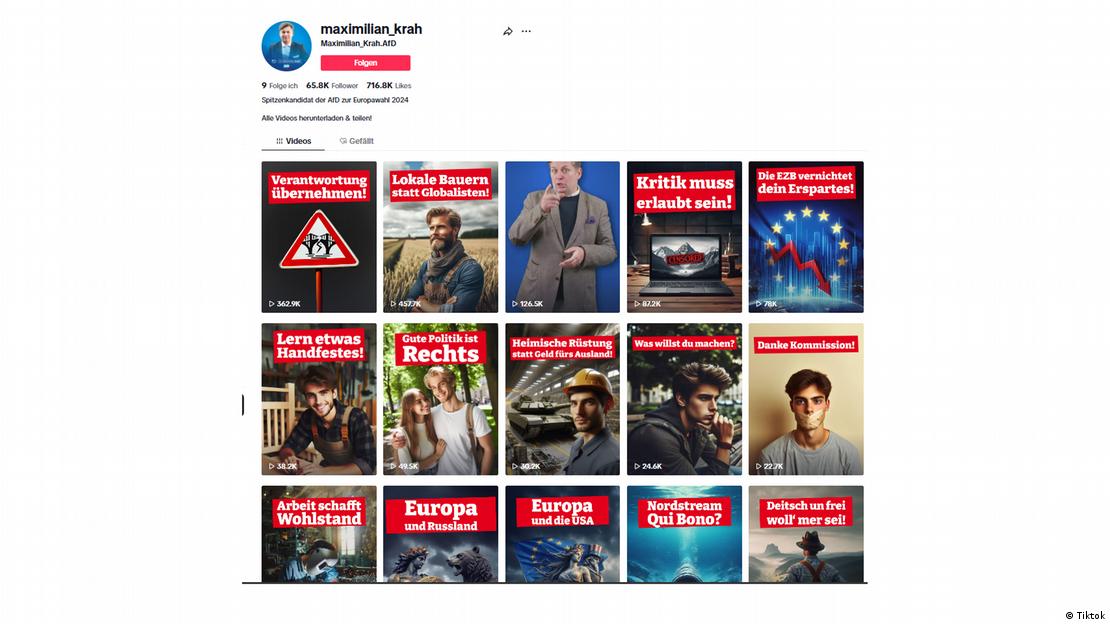
"AfD's Maximilian Krah makes heavy use of AI-generated images on his TikTok account". DW. (n.d.). Fact Check: How AI influences election campaigns. Deutsche Welle. https://www.dw.com/en/fact-check-how-ai-influences-election-campaigns/a-70469880
Experts therefore recommend introducing election standards for generative AI models that define when, how, and where candidates may use AI-generated content.
See below some examples of well-known deepfake cases in the political context (if you want to read more, click the article image):
These are examples of how deepfakes can be used for malicious purposes such as extortion, intimidation, manipulation, misinformation, sabotage, harassment, defamation, pornography, deepfake fraud, identity theft, and bullying.