

Hello!
I am Jose, a PhD student in Artificial Intelligence. Today, I will take you on an exciting journey to learn about artificial neural networks.
Let's get started!
Have you ever wondered how modern AI systems learn to perform complex tasks, such as recognizing faces, translating texts, generating content, predicting diseases, or recognizing voices? The answer often lies in artificial neural networks.
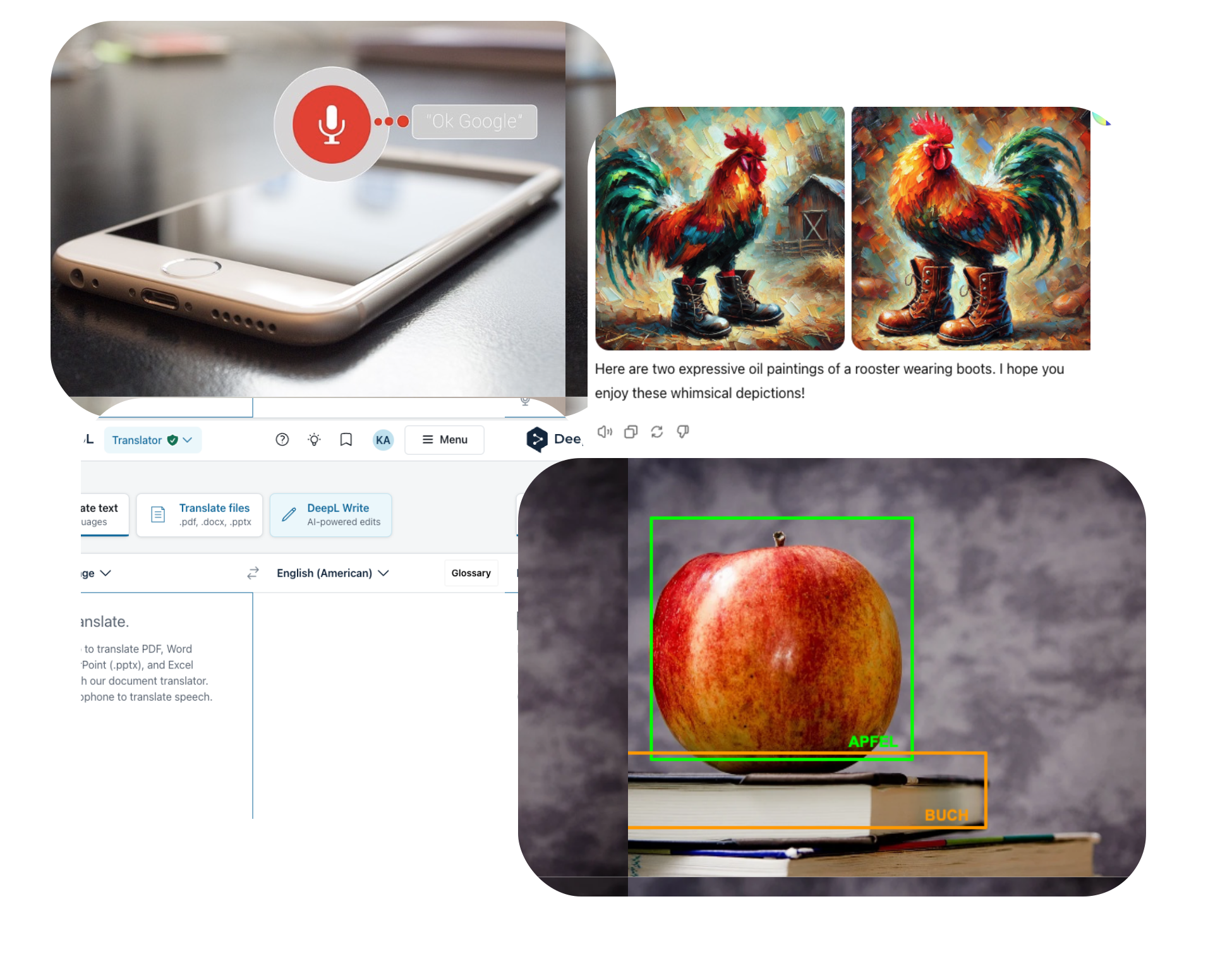
But what are Artificial Neural Networks?
Well, let's start with an interesting fact...
Did you know that early researchers were inspired by our biological neural networks to develop artificial neural networks? Yes, really!

https://giphy.com/gifs/harvard-brain-neuron-9N2UvCx7wXLnG
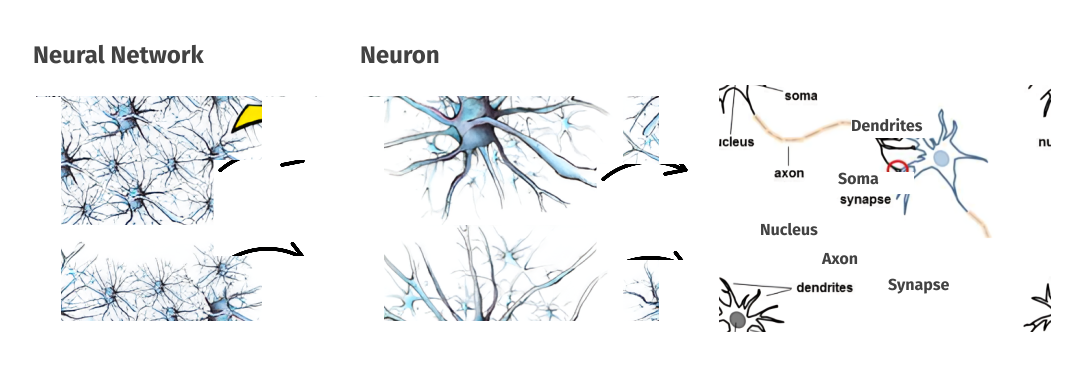
Let's take a look at the relationship between our biological neural networks and artificial neural networks:
Our biological neural networks consist of interconnected processing units called neurons. If we look closer, we see that a biological neuron consists of a soma, dendrites, and an axon. Dendrites receive signals, while axons transmit them. These signals are passed through synapses. This complex communication enables tasks such as learning, thinking, seeing, and speaking.
Ludwig, Parker E., Vamsi Reddy, and Matthew Varacallo. “Neuroanatomy, Neurons.” In StatPearls. Treasure Island (FL): StatPearls Publishing, 2024. http://www.ncbi.nlm.nih.gov/books/NBK441977/.
Frontiers for Young Minds. “What Is An Artificial Neural Network And Why Do We Need It?” Accessed October 20, 2024. https://kids.frontiersin.org/articles/10.3389/frym.2021.560631.
Sarker, Iqbal H. “Deep Learning: A Comprehensive Overview on Techniques, Taxonomy, Applications and Research Directions.” SN Computer Science 2, no. 6 (August 18, 2021): 420. https://doi.org/10.1007/s42979-021-00815-1.
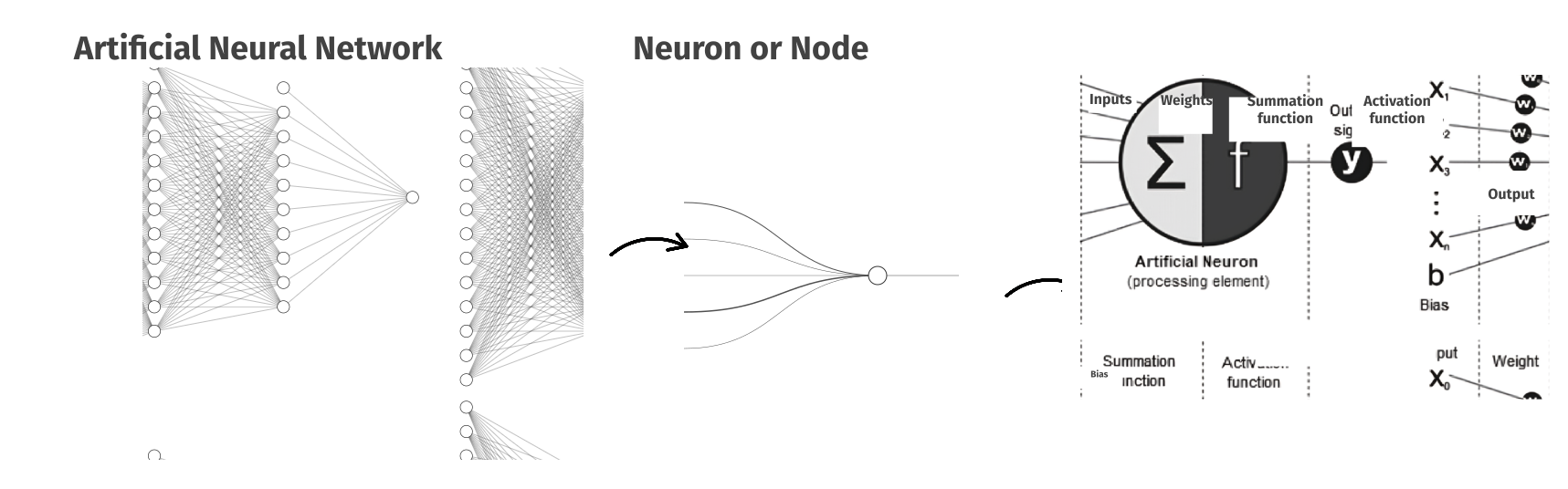
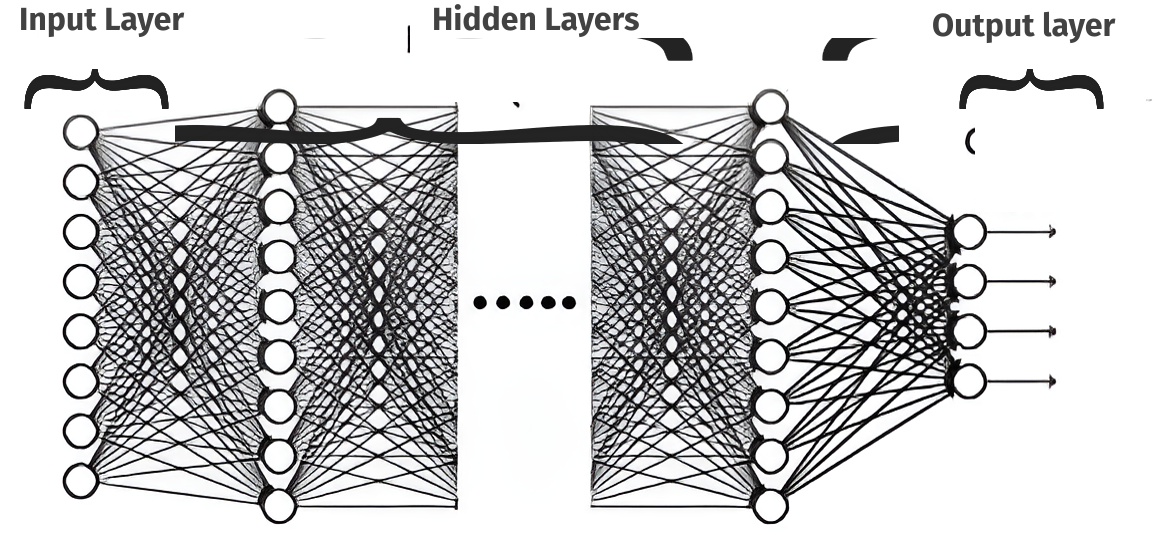
A basic artificial neural network has a special structure. It starts with an input layer, where the data is fed in. Then comes one or more hidden layers, where learning takes place. Finally, there is an output layer, where we get the result.
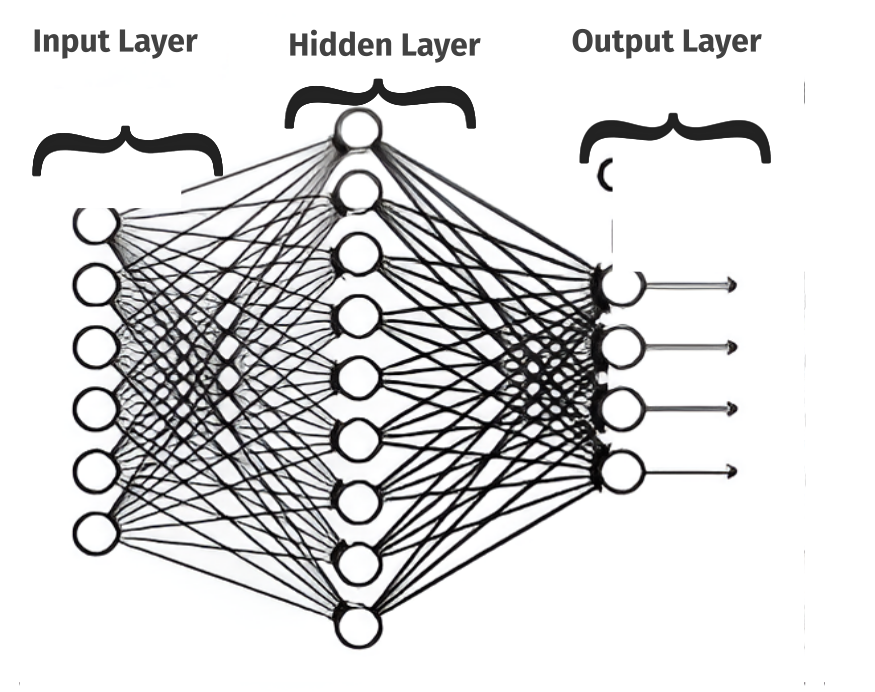
If the network has many hidden layers, we call it a Deep Neural Network.
Sarker, Iqbal H. “Deep Learning: A Comprehensive Overview on Techniques, Taxonomy, Applications and Research Directions.” SN Computer Science 2, no. 6 (August 18, 2021): 420. https://doi.org/10.1007/s42979-021-00815-1.
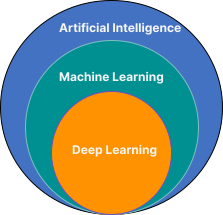
Deep Learning is a subset of Machine Learning.
And Deep Learning is a subfield of machine learning that includes techniques that allow machines to learn through deep artificial neural networks.
But how do machines learn to perform a task using artificial neural networks?
On the next page, let’s learn how machines learn to perform a task through artificial neural networks.Then let's dive in!