

In this module and the preceding one, you were introduced to the capabilities of AI systems such as ChatGPT and Gemini. These systems can produce impressive outcomes, but their deployment and operation may entail environmental costs.
Let's learn about these impacts in more detail in the next pages!
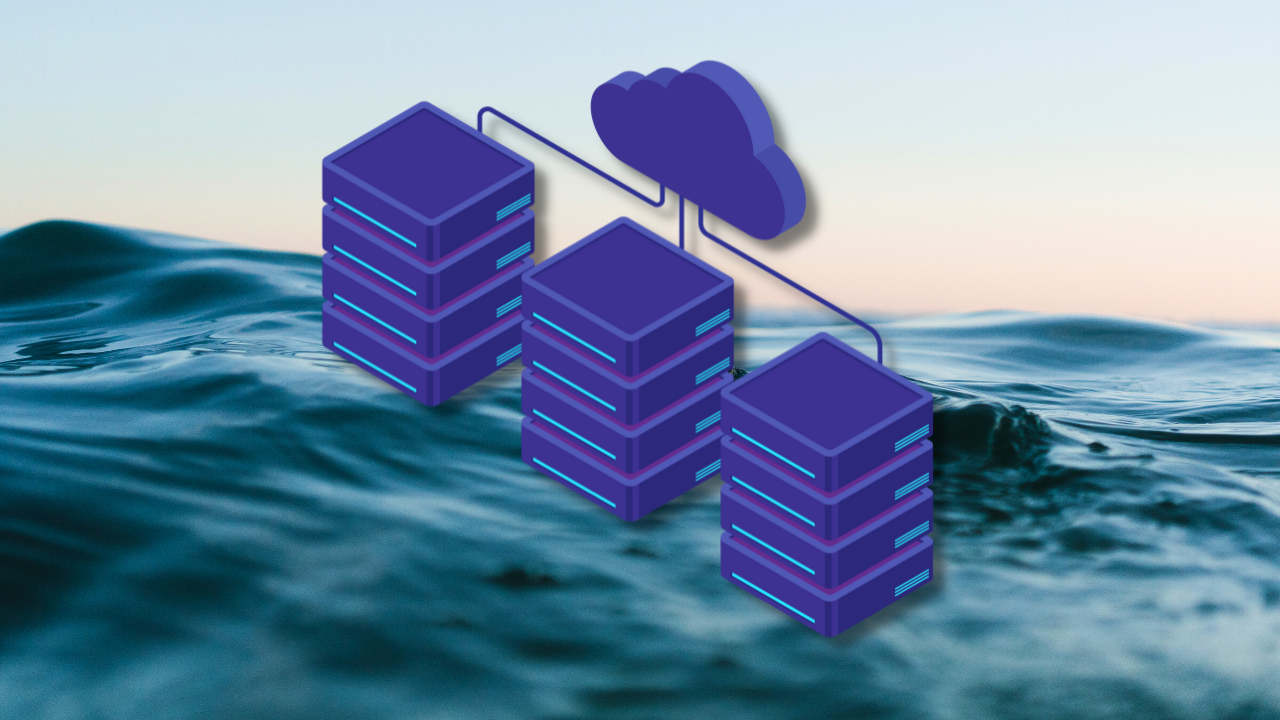
When we use AI systems like ChatGPT or DALL-E and enter a prompt, these requests are sent to data centers. In these data centers, servers receive the requests and process them using trained AI models. These models perform complex computations to generate a response, which is then sent back to the user as an output.
Also, as we know, before we can use AI models based on machine learning algorithms, they should be trained. This training also takes place at data centres.
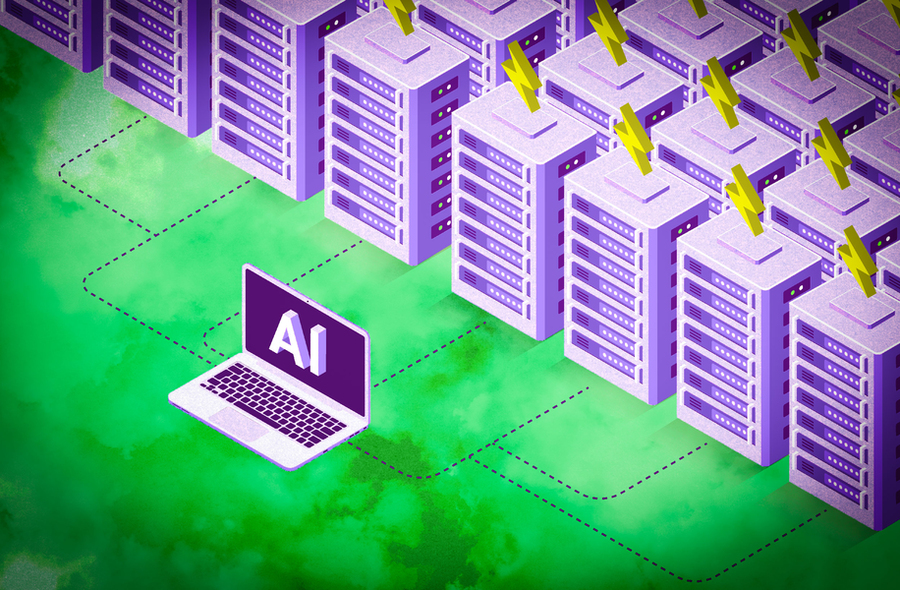
Image: iStock; adapted by MIT News (https://news.mit.edu/2025/explained-generative-ai-environmental-impact-0117)
However, to store data, train, and run AI models, the servers in data centers consume a significant amount of energy. This energy consumption generates heat, and the heat must be continuously removed to prevent the circuit boards from overheating and getting damaged. The process of removing this heat, typically through cooling systems, consumes additional energy.
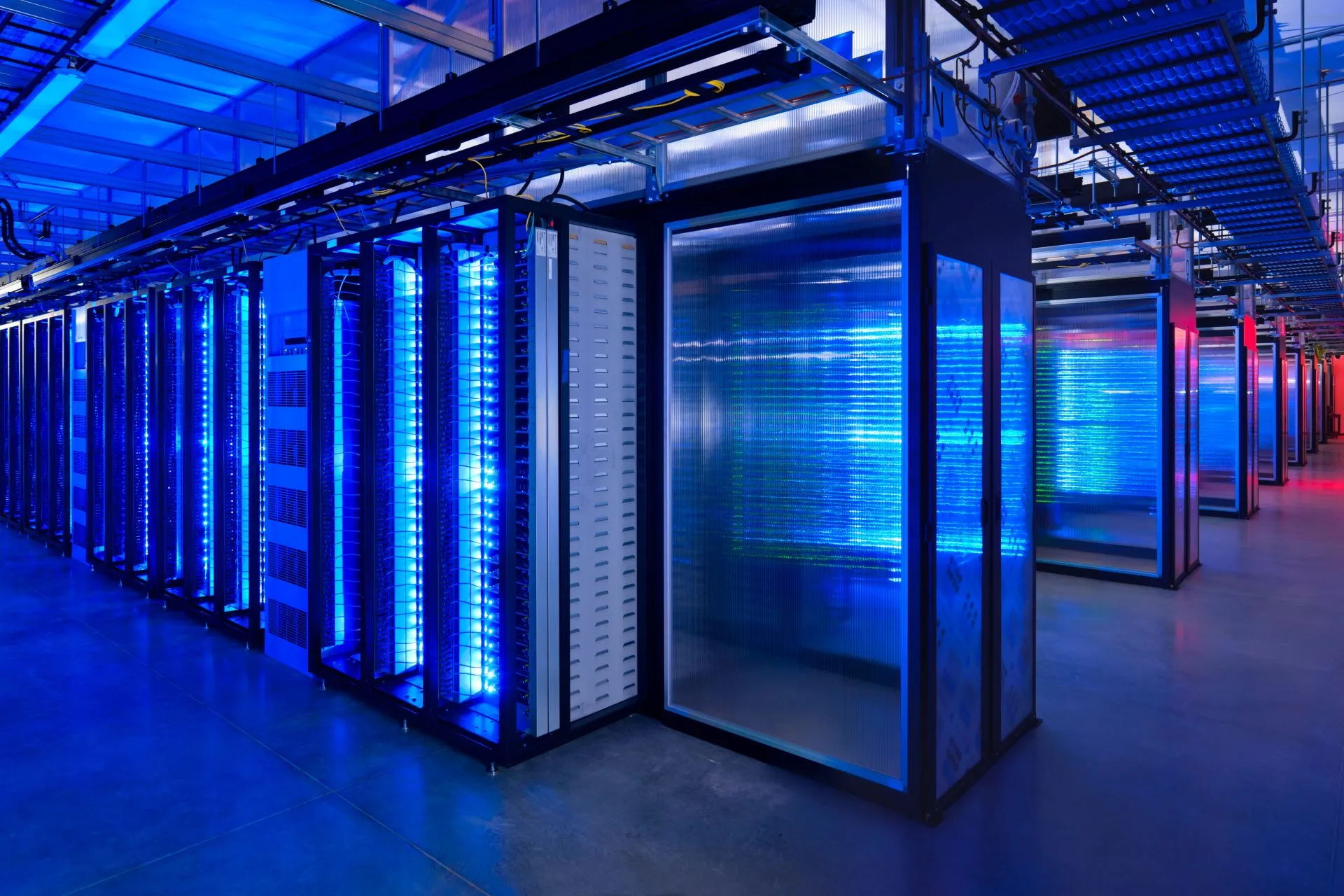
Facebook Engineering. (2020, December 9). [One of Facebook's data centers in Prineville, Oregon]. In How Facebook keeps its large-scale infrastructure hardware up and running. https://engineering.fb.com/2020/12/09/data-center-engineering/how-facebook-keeps-its-large-scale-infrastructure-hardware-up-and-running/
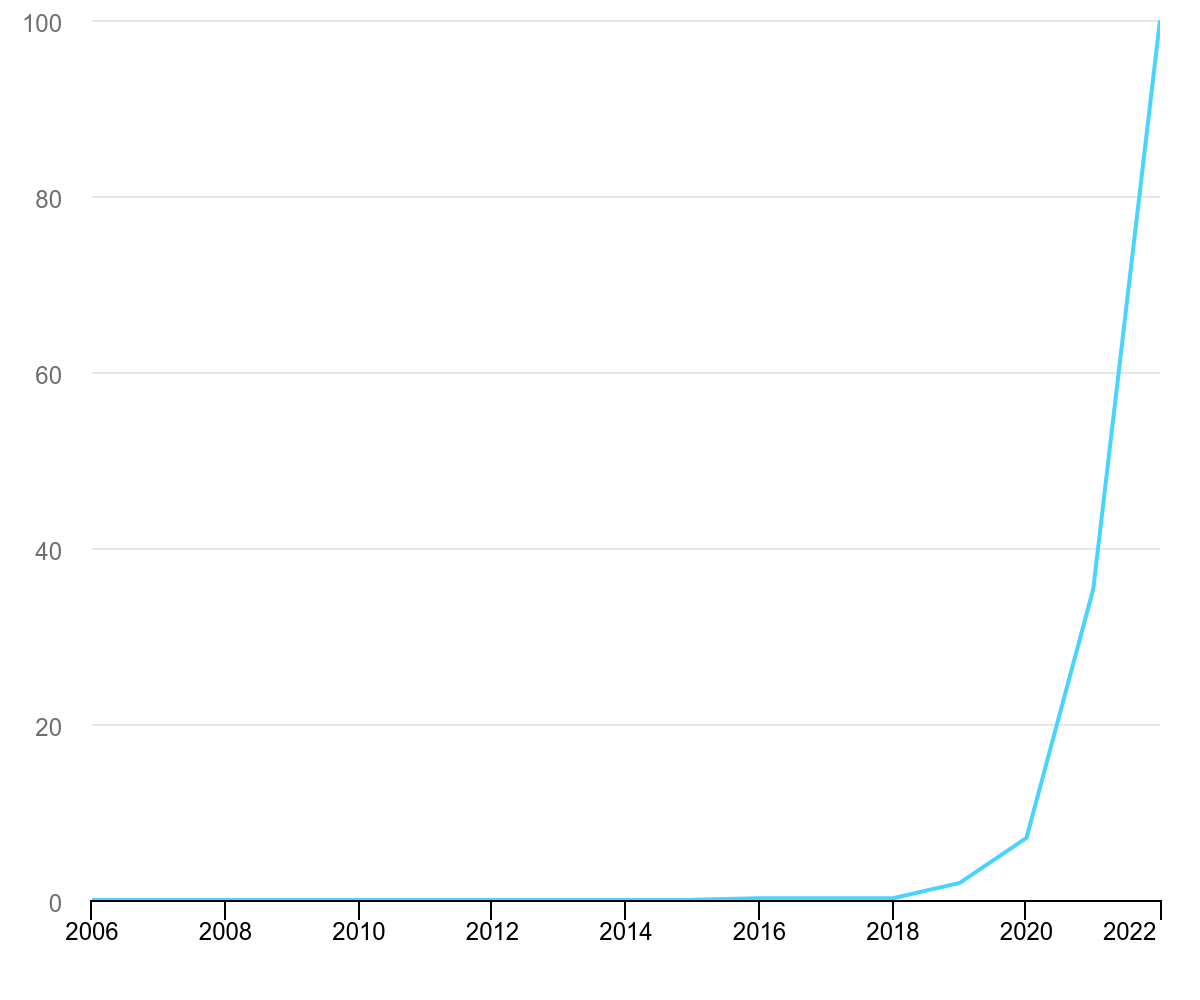
IEA (2024), Artificial intelligence model size and complexity, 2006-2022, IEA, Paris https://www.iea.org/data-and-statistics/charts/artificial-intelligence-model-size-and-complexity-2006-2022, Licence: CC BY 4.0
This figure illustrates that the computational effort required to train AI models (measured in floating-point operations, FLOPs) increased exponentially between 2006 and 2022.
Over the last few years, the size and complexity of the artificial intelligence model have increased considerably. During the training, the bigger and more complex the AI models and the bigger the dataset, the higher the electricity demand. During use, the bigger and more complex the AI models and the user requests, the higher the electricity demand.
Training and employing generative AI models, like OpenAI’s GPT-4 with billions of parameters, requires a massive amount of electricity. This high demand for electricity results in greater carbon dioxide emissions.
According to the International Energy Agency (IEA), data centers consumed 1.65 billion gigajoules of electricity in 2022, representing approximately 2% of global energy demand.
The expanding adoption of AI systems is expected to increase this consumption further. The IEA projects that data center energy demand may rise by 35% to 128% by 2026, comparable to the annual energy consumption of Sweden at the lower bound and Germany at the upper bound of the estimate.
One potential driver of this increase is the shift toward AI-enabled web search. The precise consumption rate of existing AI algorithms is difficult to determine. However, the IEA estimates that a typical query to ChatGPT consumes approximately 10 kilojoules, roughly ten times the energy of a conventional Google search.
Bourzac, Katherine. “Fixing AI’s Energy Crisis.” Nature, October 17, 2024. https://doi.org/10.1038/d41586-024-03408-z.

Moreover, recent studies indicate that video generation is substantially more computationally intensive than image or text synthesis. Producing a single video with an AI system may require approximately 30 times the energy of image generation and roughly 2,000 times that of text generation.
Chedraoui, K. (2025, October 24). Your AI videos use way more energy than chatbots. It’s a big problem. CNET. https://www.cnet.com/tech/services-and-software/your-ai-videos-use-way-more-energy-than-chatbots-its-a-big-problem/
Estimating the energy requirements for training and operating a model such as GPT-3 is likewise challenging. A 2021 study by researchers at Google and the University of California, Berkeley estimated that the training phase alone consumed approximately 1,287 megawatt-hours of electricity, sufficient to power roughly 120 average U.S. households for one year, and produced an estimated 552 tonnes of CO₂ emissions.
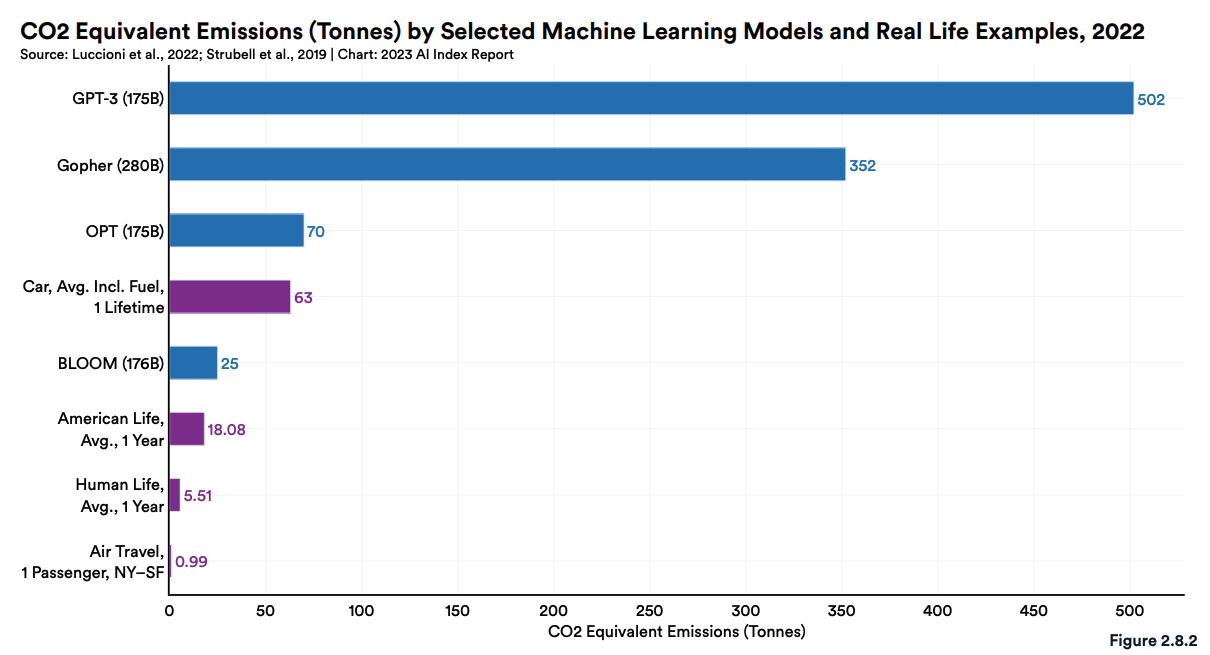
“AI Index Report 2023 – Artificial Intelligence Index.” https://aiindex.stanford.edu/ai-index-report-2023/.
The precise energy consumption rates of AI models remain opaque within the technology sector because such information is often treated as proprietary. For instance, OpenAI has not disclosed detailed training process information for GPT-4, rendering independent verification of that model's energy use infeasible.
Our current understanding derives from laboratory studies, limited corporate disclosures, and local authority data. At present, firms have limited incentives to alter existing practices.
In addition to electricity, data centers require substantial volumes of clean, fresh water for cooling systems and, in some cases, for power generation. These demands can strain municipal water supplies and adversely affect local ecosystems. This concern is especially salient given that a quarter of the global population already faces challenges in accessing safe water and adequate sanitation.
“How Much Water Does AI Consume? The Public Deserves to Know.” https://oecd.ai/en/wonk/how-much-water-does-ai-consume.
Many hardware components used in digital devices and servers (e.g., hard drives, GPUs) contain minerals such as nickel, copper, lithium, and rare earth elements.

For example, rechargeable lithium-ion batteries are indispensable for mobile devices, laptops, digital assistants, and emergency power in data centers.
Significant lithium mining occurs in countries such as the United States, Bolivia, the Democratic Republic of the Congo, Mongolia, Indonesia, and regions of Western Australia. Modern computing technologies would not function without minerals sourced from these regions; however, supplies of these materials are increasingly constrained.
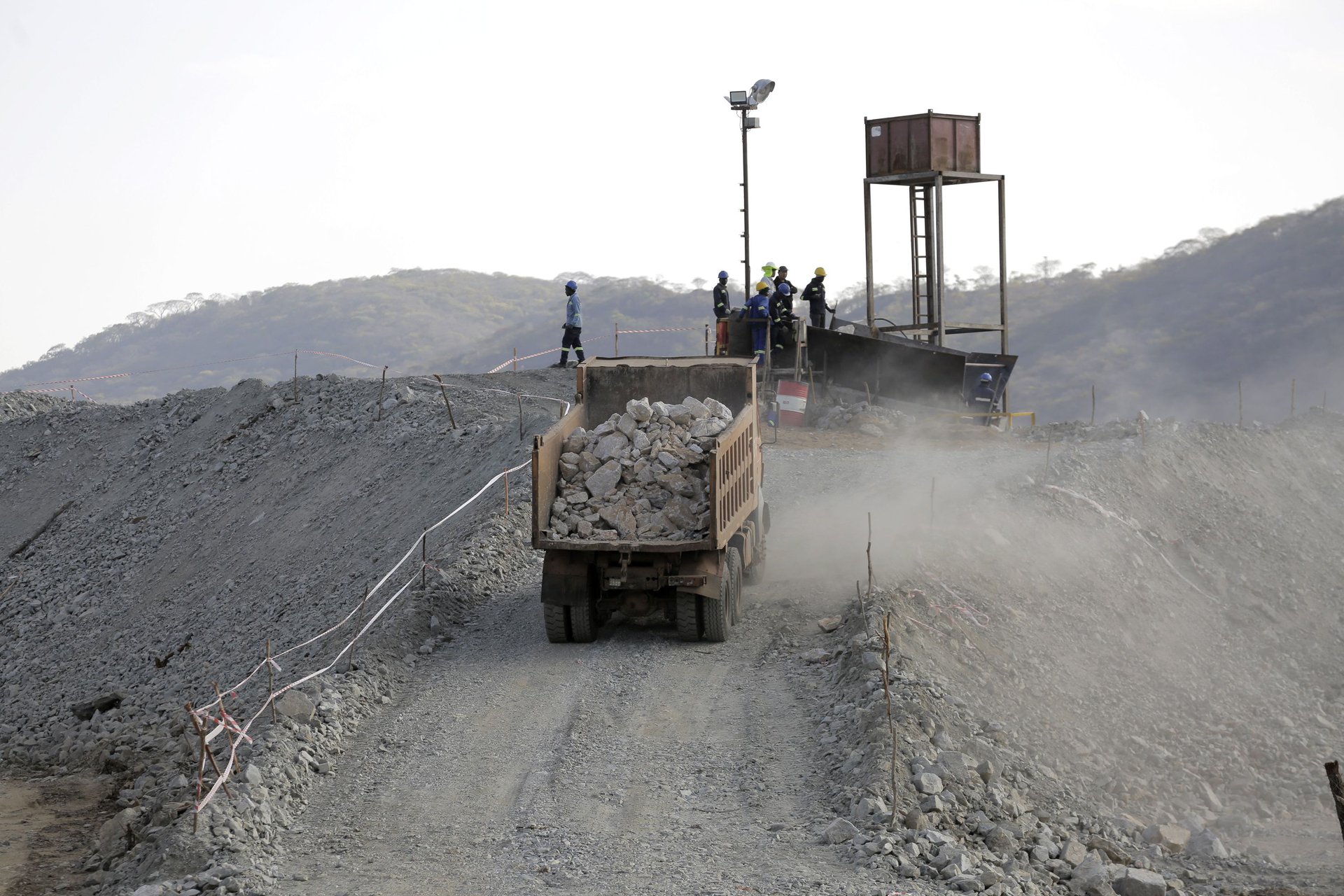
Global Witness. (2023). [A truck carries lithium ore at Sandawana Mines in Mberengwa, Zimbabwe CREDIT: AARON UFUMELI/EPA-EFE/Shutterstock.]. Retrieved January 19, 2025, from https://www.globalwitness.org/en/campaigns/natural-resource-governance/lithium-rush-africa/
The creation of these hardwares has a profound effect. Although the environmental consequences are not completely understood, it is recognized that extensive mining and refining of minerals produce large quantities of liquid and solid waste, which may harm the environment. As our reliance on AI systems grows, so does the demand for these minerals and their production processes. Presently, these operations are detrimental to both the environment and the workers in the mines.
The growing deployment of AI systems drives demand for additional data centers and new hardware. As hardware turnover increases, so too does the volume of end-of-life electronic devices, contributing to a rise in electronic waste (e-waste).
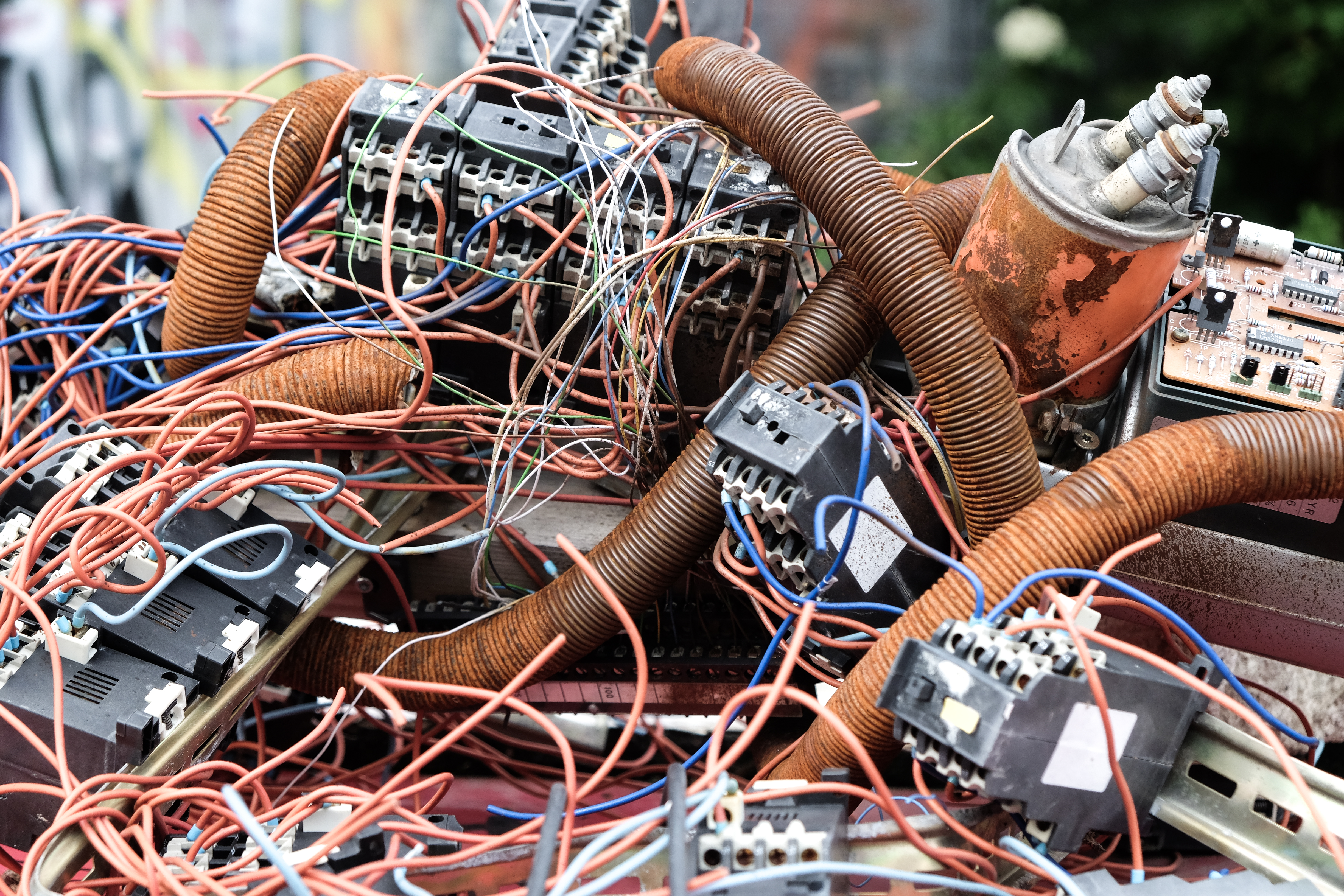
A research article published in Nature Computational Science estimates that the widespread adoption of large language models (LLMs) alone could generate 2.5 million tonnes of e-waste per year by 2030.
Wang, Peng, Ling-Yu Zhang, Asaf Tzachor, and Wei-Qiang Chen. “E-Waste Challenges of Generative Artificial Intelligence.” Nature Computational Science 4, no. 11 (November 2024): 818–23. https://doi.org/10.1038/s43588-024-00712-6.
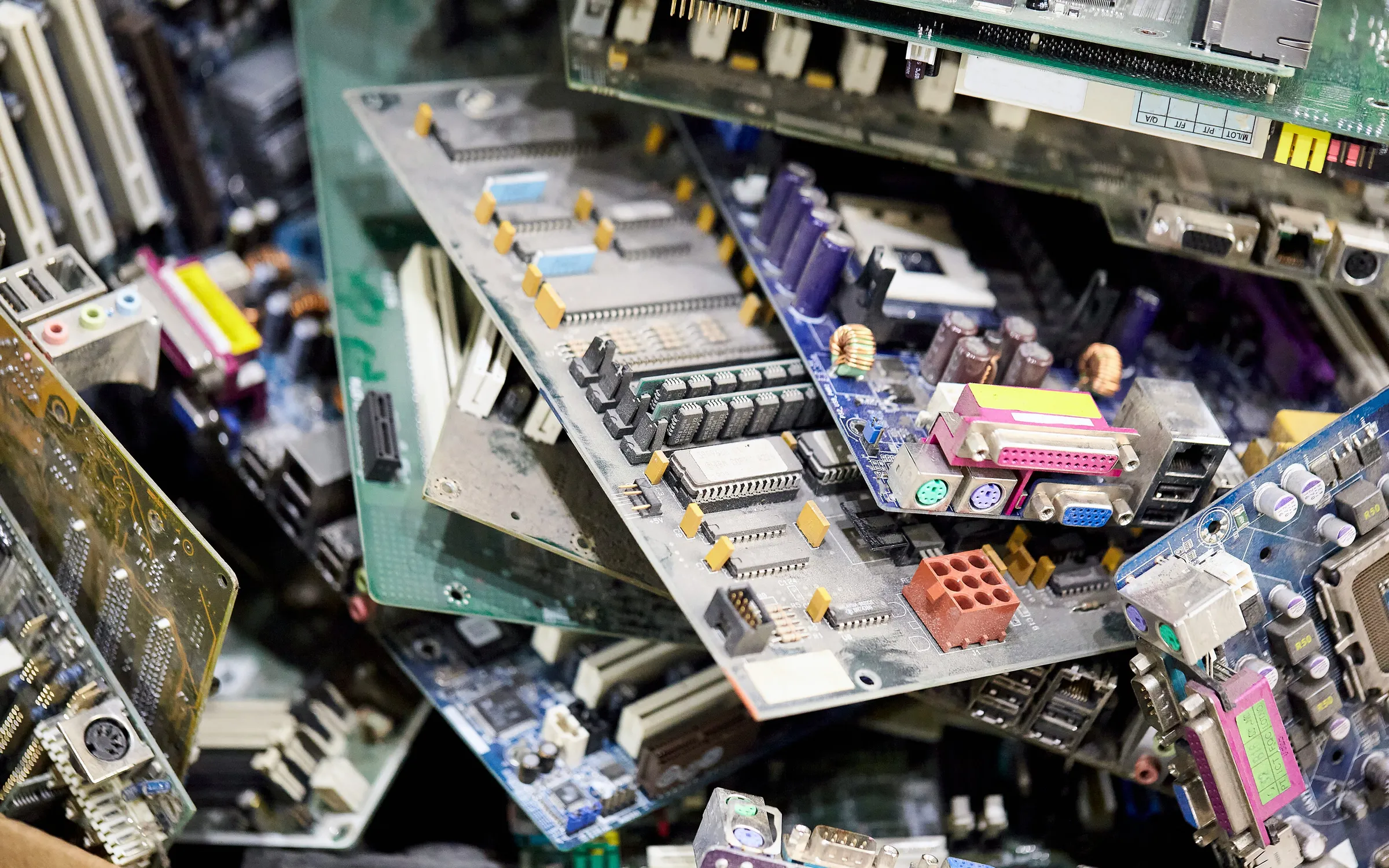
“Generative AI Has a Massive E-Waste Problem: Rapid growth could result in an annual e-waste stream of 2.5 million tonnes by 2030" - IEEE Spectrum. https://spectrum.ieee.org/e-waste.
Historically, e-waste has often been exported to developing countries such as Ghana and Pakistan, exposing local communities to toxic chemicals that contaminate water supplies and agricultural land.
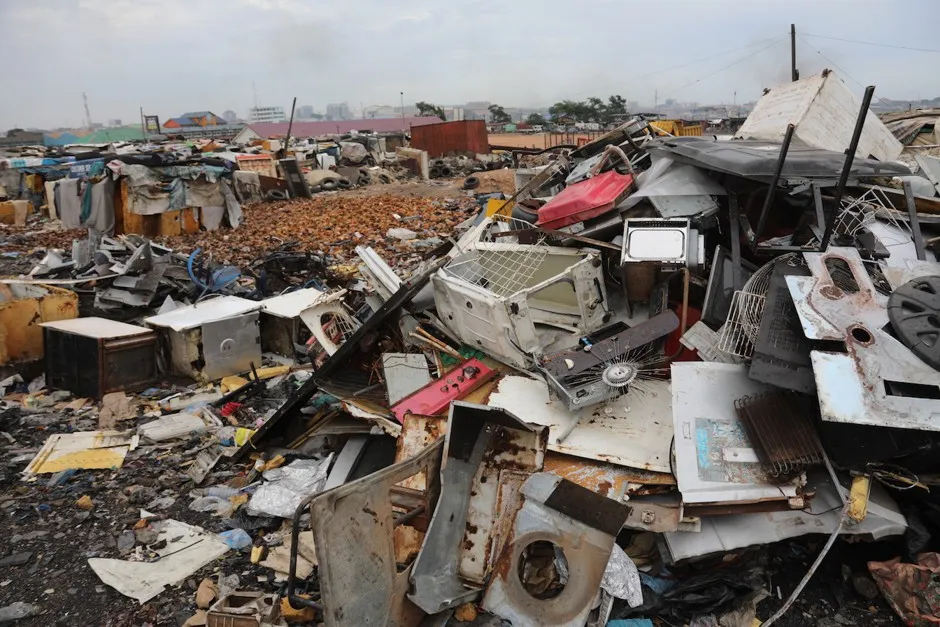
Bloomberg News. (2019, May 29). [A heap of metal and old electronics.Peter Yeung]. The Toxic Effects of Electronic Waste in Accra, Ghana. Bloomberg. https://www.bloomberg.com/news/articles/2019-05-29/the-rich-world-s-electronic-waste-dumped-in-ghana
This book has provided insights into the environmental impacts associated with LLMs. In summary, the training and use of AI models can contribute to the following effects:
- increased electricity demand and CO₂ emissions;
- increased water consumption;
- greater exploitation of natural resources and human labor;
- increased generation of electronic waste.